
fbpx
Pardon our dust! We are in the middle of a website redesign.

Does Burned Toast Cause Cancer? Maybe.

burned_toast

Burn That Toast?

Practically every week our fire alarm goes off because of someone burning their toast. Sierra View Homes Retirement’s independent senior apartments are equipped with super sensitive smoke alarms. So we know there are some individuals that like that dark, tasty bread! Most of us have burnt toast or other foods at one time or another. Indeed, some like to eat foods that are nearly charred. But, did you know that burning your toast may increase your health risk? Researchers are looking at people who eat a lot of burned toast to see if they have increased cancer risk.

We have been warned, for years, about burning certain foods because when they are cooked at a high temperature they form compounds that can cause cancer. Starchy foods, especially potatoes, can produce high levels of the compound acrylamide when cooked at high temperatures for too long. Laboratory mice studies have shown high levels of acrylamide created a higher risk of cancer.

Acrylamide is what makes bread and potatoes turn a golden color when they are fried, baked, toasted or roasted. Cooking food until it turns yellow restricts the formation of acrylamide. The problem with this is that cooking at lower temperature may cause bad bacteria to thrive and thus there is an increased risk of food poisoning. Researchers are encouraging people to reduce the risk by following a normal healthy diet and generally limiting the foods that are major sources of acrylamide.

The Food Standards Agency of the UK has launched a campaign to warn about cancer risk of eating burnt toast, over-roasted potatoes and other starchy food cooked at high temperatures even though the risk of caner has not been proven in humans.

There has been no study of people who eat burnt toast to see if they have higher cancer rates. But there are chemicals in burnt toast that have been liked with cancers in both animals and humans. Burnt toast contains less acrylamide than potato chips and fries but it still has enough acrylamide to be of concern because we are likely to eat bread more often.

Since the World Health Organization and the Food and Agriculture Organization are calling for a reduction of acrylamide levels in food, the food industry is exploring ways to cook foods using lower temperatures and using enzymes to reduce acrylamide levels. They are working hard to do this without losing desirability and taste. Many people I’ve talked to here at Sierra View want that golden brown for the taste– “Give me that warm dark toasted bread with butter and jam!”

Seniors love their toast. We suggest caution when dealing with toast. Toast your bread to the lowest level acceptable to you, or try toasting dark bread instead of white bread. You can decrease the amount of acrylamide you take in if you cut off the crust. If for some reason you do burn the toast, throw it away. Don’t try to salvage it even though it might look tempting or feel wasteful.


Glide into 2017

rockingchair_slider

In this high tech world with all the gadgets that promise to make your life better, we are now seeing that a simple rocking chair can improve your health and your overall sense of well-being. Before you conjure up some antiquated image of an old person in a rocking chair, you need to see the evidence. Studies are being conducted by a number of leading colleges on the possible benefits of spending time rocking in a rocking chair.

Many of us have spent time rocking or gliding enjoying the soothing relaxing movement. Researchers are showing that rocking chairs help to reduce pain. The spinal cord can work in only one direction. So, when the brain is sending impulses down to the legs to push the rocker the pain receptors are blocked. President John F Kennedy got relief from his chronic back pain by spending time in a rocking chair.

Rocking chairs have been shown to improve the emotional health of those suffering from depression, anxiety and/or dementia. Researchers found by simply rocking back and forth in a rocking chair for at least an hour a day improves the psychological and emotional well being of the person rocking. No study reports why this works, but the results show the more rocking you do the better the results.

A team in New York State Department of Health did a rocking chair study of 25 nursing home residents who were diagnosed with dementia. After six (6) weeks of monitoring the residents, rocking for at least an hour a day, the team found the residents were emotionally calmer. Anxiety, tension and depression were decreased and these residents required less pain medication.

A surprising benefit was the residents had better balance after rocking. The light exercise that happens while rocking burns calories, improves knee extension, and strengthens calf muscles giving residents better ability to stand up straight.

Recently, with a memorial monetary gift from the Wendell Rempel family, Sierra View Homes purchased six (6) new rocking chairs for Marden’s Place, our assisted living memory care unit. The chairs are unique in that when you sit down in them the chair stays firmly in place. When you lean back the rocking mechanism releases and the chair starts moving. This initial engagement is a great benefit to the residents who could be unaware of how to make a rocking chair move. The residents start to rock and often will keep the chair moving. When it is time to stand up the rocking mechanism disengages as the person leans forward to stand. Once again the chair is solid with no motion.

The rocking chairs are used regularly and are frequently requested by the residents. Rarely do I see a chair-sitting idol. The staff in Marden’s Place tells me the chairs have made a difference in how they care for the residents. “The residents are more calm and they seem happier,” a staff member recently told me. Another staff member said her “residents seek out the chairs and are disappointed if they are all in use.”

Rocking brings a safe activity to people who live a sedentary lifestyle. It does not make up for strength–training such as lifting weights but it has value in increasing strength, decreasing pain and creating a sense of well-being in a person who rocks regularly. So, my advice is to dust off those old rockers and place them in a place of prominence and glide or rock on through 2017.

Food: Seniors Want Fresh, Organic, and Made-to-Order in a Fine Dining Atmosphere

healthyfood

Photo courtesy of notyourstandard.com.

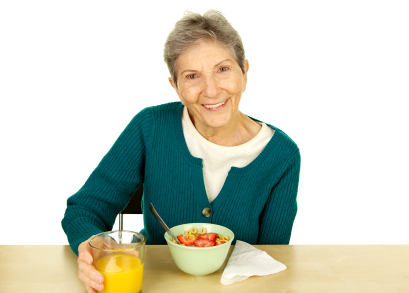
Eating organic foods, more fresh produce and less processed food seems to be the current trend. Seniors are starting to rally to that table of fresh, homemade food, even after a lifetime of poor eating habits. People who are coming to live on retirement community campuses are demanding food choices that promote a heart healthy diet. It is important for food service to meet the needs and the wants of the people who live in the community.

Today’s social norms have pushed meal times to be fast paced, perhaps an inconvenience. Mealtime is a social time for seniors. It is a time when residents enjoy visiting with family and friends. The wait time and coffee after is spent visiting listening to hear the tales of the day. Quality of life is most visible at meal time. Retirement Communities’ food service keep asking the question: Is the food not only presented in an appetizing and appealing manner, but is it true to the needs and desires of the resident?

Many years ago when I started working in long-term care much of the food served was processed. There never was any fresh fruit or fresh salads. The vegetables were always cooked till they were soggy and the amount of salt in all the food was staggering. Every Resident Council and Care Plan meeting had food complaints and concerns. Dietary staff was simply charged with getting three meals a day out to the residents. There was the main dish, which was served to everyone. If someone said “I don’t like that,” the server would go back to the kitchen for the alternate most likely a sandwich, and that was the end of choices. Standalone nursing homes were especially prone to a dull plate. As retirement communities and assisted living communities started paying more attention, nursing facilities followed. Now Medicare pushes the care of residents in Skilled Nursing to a more resident-centered care and food service also needed to change. Food choices are important. Having healthy choices for residents has become a priority. New people moving onto the retirement community campus have become more vocal about having healthy food choices. Food committees have sprung up to help dietary services understand what is desired for the food choices.

Of course, expectations for improved food services and experiences present senior living communities with a variety of challenges. Residents may have religious; cultural or ethnic food needs or preferences. Food allergies have become more common. Making sure people get the right diet therapeutically and by preference takes a vigilant staff keenly aware that each person needs to be served the right foods. Also, the multitude of plates have to arrive at the table hot, tasty and appealing, all within the one hour of the mealtime window.

Sierra View Homes is working toward increasing healthy food choices for the people who dine here. Meatloaf and mashed potatoes are still served on occasion but it is more likely you will see a fish choice on the menu. Actually I can’t knock the Sierra View Minerva Meatloaf. It is many resident’s favorite dish which is a favorite of many residents. A salad bar gives a choice of fresh greens and fruit. Sierra View has a garden planted on campus for the community to harvest for their own meal planning.

Giving choices of healthy food for today’s seniors is of great importance to the quality of life at Sierra View and other retirement communities. Having good food choices goes a long way in the satisfaction of the community residents who are working hard to have a long and healthy life. So, like our residents, I take the fresh, organic made to order by our chef in our fine dining room. As the Italians’ say “Bon Appetite” the German’s say ”Mahlzeit”.

Never Take Your Feet for Granted

baby-feet-of-a-newbornFeet. They carry you from here to there every day. Typically, we don’t give much thought to our feet until we experience pain.

Foot problems tend to be common in older people for several reasons:

  • As we age the bottom of the foot loses its cushioning making the foot more susceptible to bruising
  • Older skin can become dry and brittle, causing open areas, especially around the toes
  • Joints can become inflamed by poor circulation
  • Diabetes and can keep a foot wound from healing properly.

One way to avoid foot pain is to wear comfortable shoes that fit. Avoid tight or high-heeled shoes that put undue pressure on certain areas of the foot. Constant rubbing and pinching from shoes that don’t fit properly can cause corns, calluses and bunions. Feet change in size and width as we age, so it is a good idea to get fitted every time you buy new shoes.

Another way to avoid foot pain is to keep the blood supply flowing to your feet. Walking, stretching, or doing some type of exercise improves circulation providing benefits to more than just your feet. Avoid sitting too long especially if you like to cross your legs. Avoid tight socks, which can cut circulation causing pain or slow wound healing.

When your feet hurt it is important to know the problem to get the right treatment. Talk to your doctor if you are having foot pain to get a proper diagnosis and treatment for your pain.

The following foot issues affect many of us as we age:

Plantar Fasciitis

I have been dealing with Plantar Fasciitis for the past few months. I know firsthand how difficult everyday tasks are when foot pain is intense. Plantar Fasciitis is the inflammation of the band of tough tissue connecting the heel bone to the toes. The pain is usually more intense in the morning as I get out of bed. I also find the pain is quite intense after I have been sitting a while. To heal Plantar Fasciitis, you may need to rest your foot, and use arch supports and add extra cushioning to your shoes. Patience is important because the foot pain can return if you try to do too much too soon.

Athlete’s Foot

Athlete’s Foot is another challenge for seniors. You don’t have to be an athlete to develop this fungal infection. Warm, dark, moist areas, like a foot inside a shoe is a perfect environment for this fungus to grow. Symptoms of athlete’s foot are redness, blisters, peeling and itching. Changing shoes every oth
er day to allow the shoes to dry out, use cotton socks and after a shower or bath dry your feet especially between the toes. Wearing sandals allows the feet to breathe.

Corns and Calluses

Corns and calluses can be very painful. They can certainly limit your activity. The best way to avoid corns and/or calluses is to wear properly fitting shoes. There are numerous over the counter remedies for this issue, but there is a possibility you could cause more damage and have further pain. A podiatrist can help you deal with corns and/or calluses especially if you are diabetic or have poor circulation.

Hammertoes

Hammertoes happen when the shoe is not wide enough at the toe and the knuckle swells pulling the toe back. This can cause a balance problem for seniors that could result in a fall. The best way to prevent a hammertoe is to wear properly fitting shoes with ample space for the toes. If you suspect you have a hammertoe, see your doctor or podiatrist for treatment.

Ingrown Toenails

Ingrown toenails can become infected and extremely painful. It is good to check your feet frequently and to trim your toenails carefully leaving a little of the white so as to keep the nail from pushing into the nail bed. Cutting toenails too short can lead to problems of infection and pain.

Diabetes and Feet

If you are diabetic, it is extra important to pay attention to your feet. A minor corn, a cut or a callous can become life threatening due to the issues diabetes can cause. Diabetes can cause the blood vessels to shrink causing a wound to heal very slowly or not at all. It can also damage nerve endings leaving you unaware that there is a problem with your feet. Lack of circulation or lack of feeling can lead to some very serious consequences such as amputation. It is extremely important that you check your feet every day, especially if you are diabetic.

Blood flow to your feet is vital. Get up, move around, do stretches, and take walks, all of which keep a healthy flow of blood traveling to your feet. Sierra View Homes Retirement Community has many paths to take a walk, there is a heated pool for swimming and exercise equipment to build strength. You will walk better and farther with proper fitting shoes with good support and have good cushioning. A podiatrist comes on campus to care for the more difficult foot care issues.

This is not a complete list of possible problems that can happen to your feet. Foot pain can really hinder quality of life. It is important to pay attention to your feet. Watch for problems and address them quickly. If there is a problem, see your doctor to get treatment and keep moving for a long and healthy life.

Bathing in Music, It’s Good for the Mind and Soul

singing2Have you listened to music lately? Do you have songs that touch you in a certain way? Is there music that takes you back to your childhood or your youth?

I recently attended a California Association of Nursing Facilities Conference in Southern California that brought home the importance of music. The conference offered a number of educational sessions on person- centered care. For me, the most intriguing discussion was about music.

Sierra View Homes has always recognized the value of live music entertainment, but the newer studies focused on the individual listening to a personal play list of songs. Oliver Wendell Holmes once said “take a music bath once or twice a week for a few seasons. You will find it is to the soul what a water bath is to the body.” Music activates many parts of the brain.

In one of the sessions we watched the documentary “Alive Inside: A Story of Music and Memory.” The documentary is about what Dan Cohen, a volunteer in a nursing home in greater New York, found as he gave each person the chance to listen to music that touched them when they were much younger. He took iPod Shuffles and set out to make personal play lists for each person in the nursing home. The play list had to be specific to the person’s preferences. Great pains were taken to get specific songs or specific artists for the nursing home resident to be able to identify.

What happened when most of the residents listened to their particular play list was nothing short of remarkable. Through the documentary you see people, who because of dementia have not communicated in years, respond to their music. The documentary showed music successfully calming residents who had extreme agitation or were in great pain. Residents with dementia responded by becoming more alert and communicative. Those who were alert and oriented enjoyed sharing the memories the music brought them.

Check out an excerpt from this remarkable film. Isn’t it wonderful how Henry’s face lights up?

Music is profoundly linked to personal memories. In fact, our brains are hard-wired to connect music with long-term memory. For people with dementia, music can connect those long-term memories that could give a sense of peace and tranquility. A person with dementia looses the short-term memories first leaving the long-term memory intact for a longer period of time.

Studies are showing that music often calms chaotic brain activity and enables the listener to focus on the present moment and regain connection to others. The brain uses many areas to process music. These parts are slow to be damaged by dementia or other chaotic brain activity. Henry, in the documentary, was an example of that. He “woke up” when he listened to his personal play list of music and was able to communicate appropriately immediately after his music stopped. After a time, he would slip back into a slumped over non-communicating self. When the music is played again he becomes animated and verbal often singing along and enjoying his music. When the documentary was made, Henry had been listening to his play list for four years. He had the same response every time he listened. In the documentary his daughter is thrilled her father responds so well to the music because their family time was enhanced and she feels connected to her father.

Indeed, Sierra View Homes is already aware that music can be a very positive experience for our residents. There are many live performances that happen every month. We are now in the process of acquiring iPod Shuffles and the activity staff is busy working on making personal play lists. I am excited to see the music work with residents who currently are restless and uncomfortable either from dementia or something else. Music has the potential to reduce pain, calm those who are easily agitated, bring back memories of the good-old days and give pleasure.

Personalized music may not work for everyone, but studies show that it will help improve the quality of life for most. Trying it has no adverse side effects. I am looking forward to what the outcome will be for the residents of Sierra View Homes!

Understanding the Durable Power of Attorney

Image by Dan Moyle - Creative Commons (https://flic.kr/p/f5j58F)

Durable Power of Attorney for Healthcare and Finances

What happens if you should suddenly have a life-threatening emergency? You are unable to talk and unable to tell the medical professionals what your wishes are. The medical personnel have taken an oath to do everything possible to save you. They may give you medical attention you do not want.

As you look to the future it is important to put safeguards in place to make sure your wishes are carried out through the rest of your life. There are things you can do at any age to put your wishes in writing and designate someone to follow your decisions in case you are unable to do so.

A Durable Power of Attorney for Health Care (DPOA) enables you to designate another person, called the attorney-in-fact (agent), to act on your behalf regarding healthcare issues. It is important you pick an agent who understands what your wishes are, and promises to follow you guidelines. Some people pick family members, others pick a friend. Be sure this person is aware of and agrees to what you are asking them to do. There is a place on the form to designate a second person in case the first one cannot fulfill the responsibility. I feel the second person should be someone younger than you are. I often see DPOAs that list the husband or the wife of the person being admitted to the Sierra View Homes Nursing Care. There are times when that person is too emotionally distraught or unavailable to do the job.

The DPOA not only states who is to be your agent but also states what your wishes are regarding end-of-life issues. Do you want to be kept alive no matter what?

You can state what limitations of treatment you want. Be specific with timelines of treatment procedures and when it is time to discontinue them.

The DPOA can be prepared and is filed away for future use or you can have it be in affect right away. It is important to have this document in your doctor’s office and with the person who will be acting at your agent. Hospitals, nursing homes, assisted living facilities and doctors respect the DPOA for Healthcare.

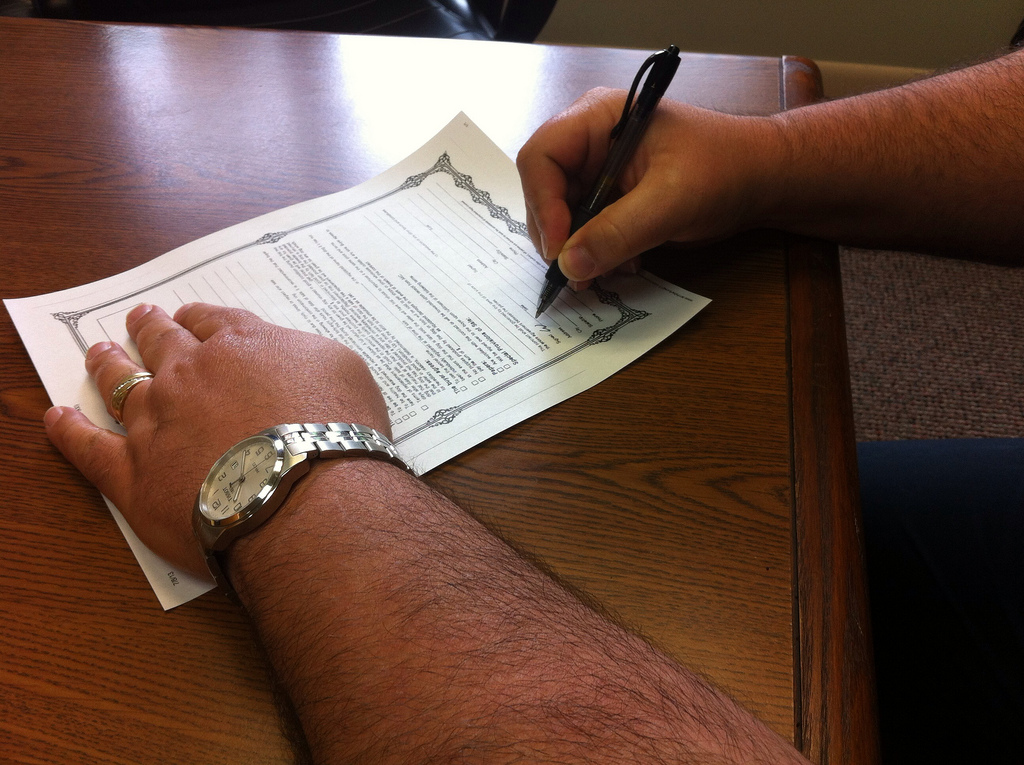
You can find the form for the DPOA for Healthcare online, in your local nursing homes or you can have a lawyer draft one for you. After you complete the form, two witnesses must watch you sign it. These two witnesses must have no direct interest in how long you live. It should be two friends rather than two family members. Once the signatures are in place the document is legal. If you would prefer, you could have the document signed with a notary. When you use a notary you do not need witnesses. There is a different procedure that must be followed when you are a resident in a nursing home. There is a law that states the DPOA must be completed in the presence of an Ombudsman. The Ombudsman serves as a neutral third party to ensure the resident in the nursing home is making the choices of their own free will.

Durable Power of Attorney for Finances

What happens if you cannot take care of your financial obligations because you have a serious health issue or struggle to understand all the bills? There is a Durable Power of Attorney for Finances to name an attorney-in fact (agent) to act on your behalf. Your agent is given the ability to handle your financial affairs. It is important to state in your document if you want your agent to handle your affairs on an ongoing basis or for a short period of time, immediately, or in the future. You can limit what your agent can do for you. But keep in mind that if you become unable to continue handling your affairs the limitation may cause problems.

It is important you find an agent, who can and wants to handle the task. This person needs to be someone you can trust, who keeps good records and will be around for an extended period of time. Talk to the person you have chosen so that they understand what you expect of them. Be sure they understand what their responsibility will be. The DPOA for finances should be on file where you do business.

At Sierra View Homes Retirement Community, I have seen how difficult it is when the resident has no documentation explaining what his/her end of life wishes are. Often families are emotional or in disagreement with each other when it comes to making difficult but necessary decisions. Residents who have completed a DPOA for Healthcare have already expressed what their wishes are and have designated someone to follow those directions. Some of the guidelines may not be what the family members want but they can follow through knowing this is what my loved one wants.

The fact is, we are all living longer and statistics show that many of us will have some form of disability in the future. I encourage everyone to take steps to ensure your wishes are documented. Talk with someone you trust to determine what your wishes are and who you want to act as your agents. Then get the DPOA for Healthcare completed. Likewise think about your finances and who you would like to help you if you could no longer take care of your own finances. Then get that DPOA done too. Both forms are good until you decide to change them. It gives you peace of mind to have some of those hard decisions determined.

Macular Degeneration

Image by F Delventhal - Creative Commons

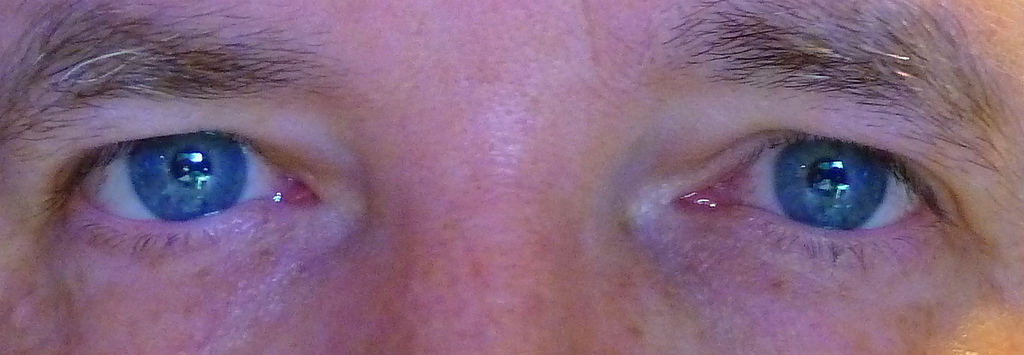
There is something mystical about sight. Vision is so mechanically complex that we all take our eyesight for granted until something goes wrong. As we age there are numerous ways that our eyesight can be compromised. Many of us are familiar with cataracts and understand what they do to blur vision. Cataracts are one of many possible vision problems as we age. Lately, my attention has been drawn to a number of my friends at Sierra View Homes and family members who have been diagnosed with macular degeneration. I realized I did not know much about the disease and became interested in understanding macular degeneration better. 

In a healthy eye, the eye receives and processes light. The retina takes the light and turns it into signals that the brain interprets as visual images. The macula is part of the retina where the detailed central vision happens. Peripheral vision is the side vision and is the less acute vision and is not affected by macular degeneration. 

People 50 years and older can be affected by Adult Related Macular Degeneration (AMD). AMD happens when the macula part of the retina is slowly destroyed, and represents the leading cause of vision loss in older adults. People who have macular degeneration talk about how blurred the central part of their vision is. AMD affects the central vision of one or both eyes by causing blurred vision and shadows that create blind spots. This causes problems with activities such as driving, sewing and reading. b            

There are two forms of AMD: wet and dry. Either version can cause severe vision loss. The dry form is the most common. It has three stages, early, intermediate and advanced. The dry AMD increases slowly as the light-sensitive cells in the macula gradually break down causing the central vision to blur. There are few symptoms in the early stages so you may not be aware things are changing.  AMD is not painful and if you are not getting regular eye exams you may miss the early symptoms. In the later stages, the blurred vision is the most common symptom. AMD usually does not affect both eyes equally. You can have it in one eye, or it can be in both eyes but in different stages. 

The wet AMD is the advanced form of AMD. People who have the dry AMD are at risk of the disease progressing to the wet AMD. Wet AMD happens when new blood vessels under the macula leak blood and fluid causing the macula to break down quickly. Blood and fluid can cause the macula to swell damaging the retina and create scarring of the retina. Wet AMD causes the central vision to become distorted. Straight lines look wavy and blurred. It can also cause a blind spot that is in the center of your vision. The good news for people with wet AMD is that eye care professionals can delay or even stop the progression of the disease. There are several therapies that could be done. None of them are a cure for AMD. It is important that you work closely with an eye care professional to determine what  is the best therapy for you. 

AMD affects older adults. People who are 50 and older should get regular testing done.  As we age our chances of AMD increases. Caucasians are more likely to get AMD than people of other nationalities. If you smoke you double your chances of AMD and if your grandparents or your parents had AMD you are at higher risk. 

Research is telling us to avoid smoking, exercise, maintain normal blood pressure and cholesterol levels, and eat a healthy diet with an abundance of green leafy vegetables and fish to reduce the impact of AMD. Have regular eye exams and follow your eye care professional’s advice to slow down or stop the progression of the disease. 

In my discussions with people with macular degeneration, I sense the frustration of not being able to do the things that once were so easy. It becomes difficult to sing out of the hymnal in church because the eyes can’t focus to read the print of the song. Using the computer becomes more frustrating because there is not enough contrast to see clear enough to work the different functions. Driving becomes difficult when you need to look all directions and have a spot you can’t see through. The central part of our vision is necessary for so many tasks. It would be easy to become depressed. If someone you know has AMD, it is important to stay supportive and to help the person as they work on rearranging their life style to accommodate the vision changes. There is no cure for AMD but with support those affected by AMD can lead a happy healthy lifestyle.

Do You Own a Pet?

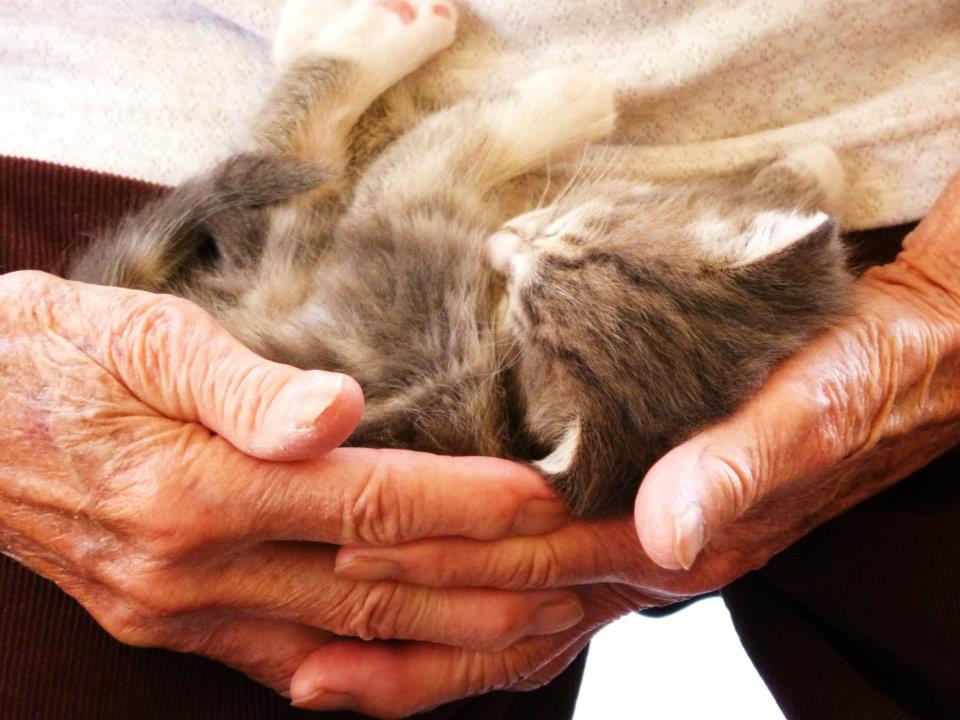
Looks like this kitty enjoyed her visit to Sierra View's nursing care center!

Pets can be good medicine.

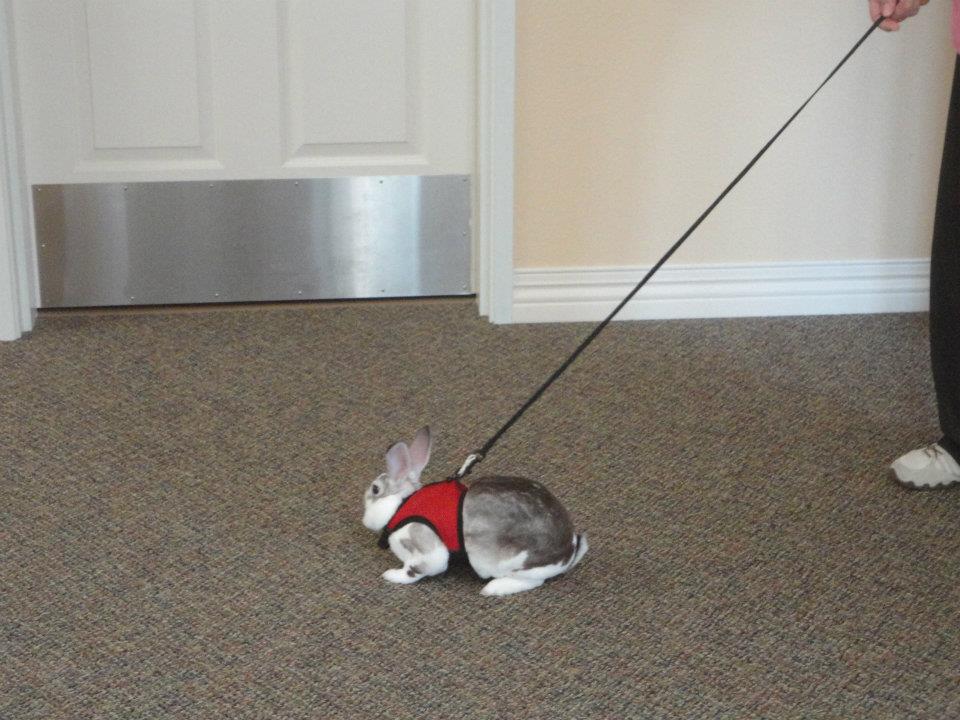
Do you own a pet?  Pet lovers are quick to tell you about the immediate joys of pet ownership. At Sierra View, we pride ourselves in our lenient pet policy, which has allowed many independent and assisted living residents to bring their furry loved ones with them. As a result, our campus boasts many non-human residents – from small dogs, cats, birds, and fish to a friendly bunny who hops down the Sierra View hallways on a leash!

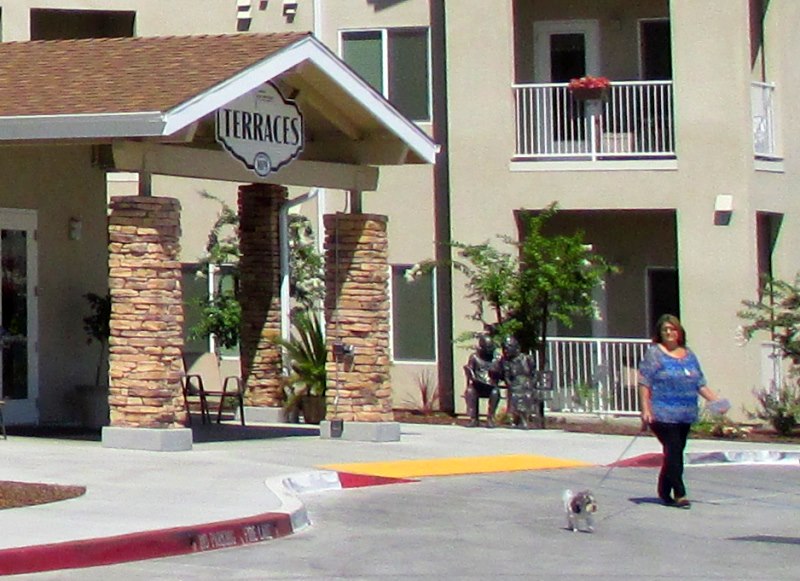
A common sight in the halls of The Terraces, Sierra View's independent senior apartment building.

One resident of Sierra View Terraces senior apartments told me she has always had a pet. “When you live on the ranch you must have dogs,” she said. Her small dog lives with her in her Sierra View Terraces apartment, and makes friends with passers-by on daily strolls around the neighborhood. “The companionship is special, and I am so thankful for my dog. He lets me know when someone is walking up to my door, and is a great conversation starter when we meet people on our walks.”

Researchers have been looking at the possibility of health benefits for pet owners.  Studies on the effects of owning and caring for a pet have revealed that pet ownership can bring remarkable results for your health. 

Studies show that pet owners are less likely to suffer from depression. Pet – especially dogs and cats – fulfill the basic human need for touch. They offer unconditional love, attention, and companionship. Caring for a pet can boost your morale and bring pleasure to your days. Pets require regular feeding and exercise so, no matter how depressed, anxious or stressed you are, your pet needs you to care for it. Being needed, and the job of taking care of an animal, can give your life purpose and provide a sense of self-worth. Veteran groups have seen amazing changes in depression with disabled soldiers. Some animals can even sense a person’s mood and purposely try to change it. 

Stroking, holding, cuddling, or otherwise touching a loving animal can have a powerful effect in lowering blood pressure. Touch and movement are two healthy ways to deal with stress. Pets encourage playfulness, laughter, and exercise. Studies show that playing with a pet can elevate levels of serotonin and dopamine, which calm and relax us. Laughing at the antics of a playful pet helps you enjoy life, and adds to your sense of well-being.   

Having a pet can also be heart-healthy. Research shows that heart attack patients who have pets recover more quickly and have longer life spans than non-pet owners. Going for walks with your dog, riding a horse, or chasing a kitten keeps you moving in heart healthy ways. “My dog has to say hello to everyone, and that makes my walks with him take a long time,” mentioned a Sierra View resident. “So I end up getting more exercise!” 

Pets also help us take better care of ourselves. When you have a pet, you have to be there to take care of it. In fact, pet owners over age 65 are less likely to need to visit the doctor with ailments. Pets encourage laughter, playfulness, and exercise. All three boost your immune system and increase your energy. 

A pet does not have to be a cat or a dog. There are many animals to consider. When you decide to get a pet, look at your home environment, your time commitments, how active you are now, and who else lives in your home. Some pets require more time than others, so think about what the pet requires and if that commitment works for you. 

Pets are not for everyone. It is important to weigh the pros and cons when considering a pet. Food, shots and equipment can represent a significant financial investment. Some animals, especially dogs, may need training and ongoing time for walks and outdoor play. The time commitment cannot be shortchanged, so it is necessary to look at the time you can devote to a pet. Additionally, a particular pet’s lifespan and adult size should be considered – for example, some tortoises sold in pet stores can live up to 100 years and grow to weigh hundreds of pounds. 

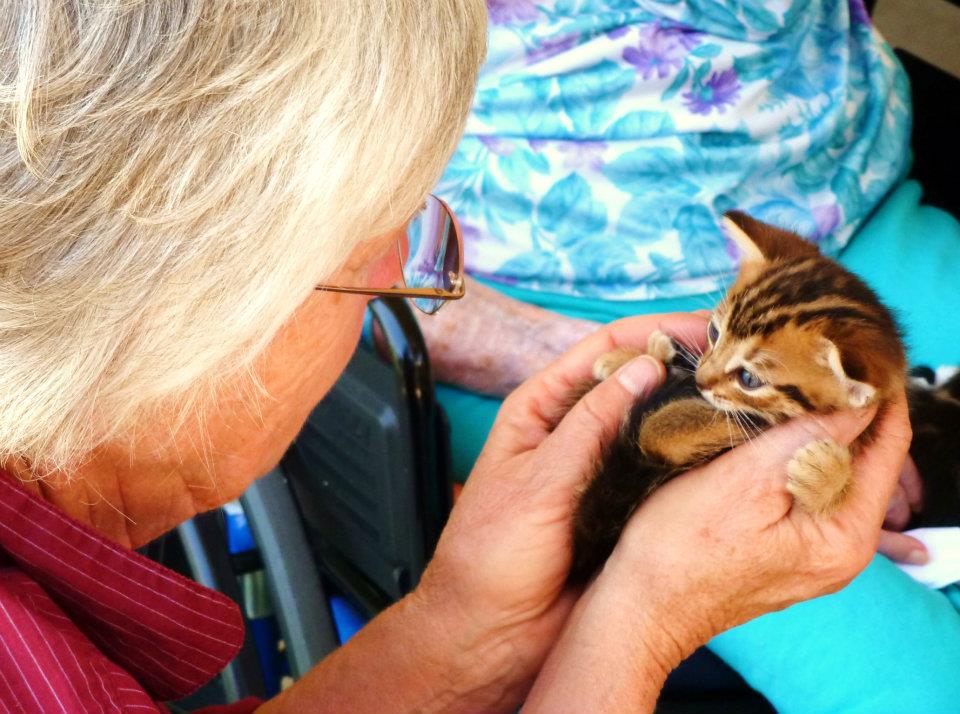
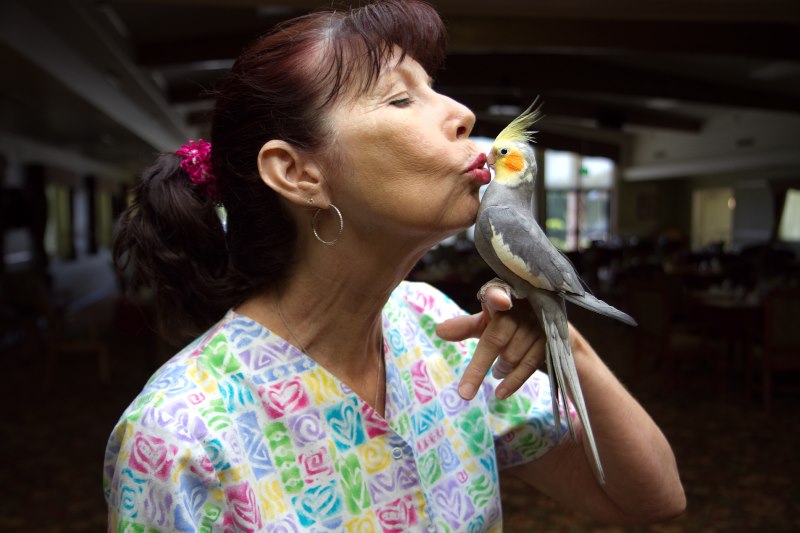
Throughout our retirement campus, Sierra View Homes Retirement Community has several birds and aquariums for residents to enjoy. Sierra, one of our most popular birds, can often be found on a resident’s shoulder happily taking a break from sitting in her cage.  Recently, three-week-old kittens brought smiles and cuddles to many people in both our Nursing Care Center and Assisted Living. We also have visiting animals, such as a therapy dog that stops by frequently to cheer up anyone who wants a bit of love. 

Owning a pet has many positive attributes. If you (or your parents) are feeling down, stressed out, lonely, or have health issues, consider purchasing a pet. Researchers have found the pet owner feels remarkably better in just a few short months. As we age and our families and friendships change, caring for a pet can give you the lift you need to stay healthy and happy well into the future.

11 Benefits of Living in a Retirement Community

Wondering if retirement community living is really better than living in a house? It is!

Below is a list of reasons that retirement community living beats living alone in a home every time.

Benefits of Living in a Retirement Community:

  • FriendshipsFriends

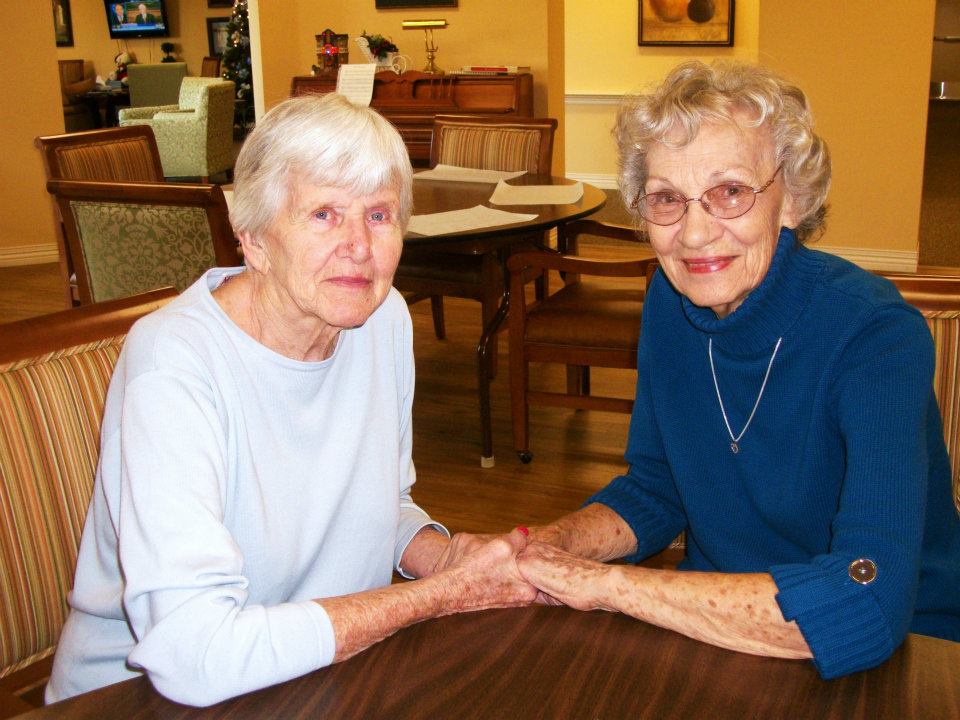
    As we age, we often lose roles, spouses, and friends. As a result, living at home can become lonely. Living with peers offers friendship, companionship and a sense of community. Neighbors become traveling companions, friends who share a cup of coffee, and often a fellowship and support group in times of need.

    On the day I arrived and moved into my apartment, I was welcomed by many of my neighbors,” said Mary Lou Martens. “One of my neighbors even brought over some cupcakes to enjoy with my coffee! My doorbell rang quite often during that first week. Though I didn’t know them at the time, they’ve since become good friends. It’s so nice to know that I’ll always have someone to talk to, someone who notices when I’m away, and always someone who will help when it is needed. We look out for each other! One of the best decisions in my life was coming to live at Sierra View Homes Retirement Community.”

  • Safety and Peace of Mind.

    Living in a retirement community can combine the best of both worlds, offering both freedom and safety. Sierra View’s gated community, security cameras, key-card locked building, indoor mail slots, and vigilant neighbors mean that you have more security than you would in a house. Friends check in on each other, noticing when someone is missing from the dinner table. Additionally, in case of some sort of medical event, nursing staff are right across the parking lot. All of this combines to increase the feeling of safety and provide peace of mind.

  • Less Home Maintenance.

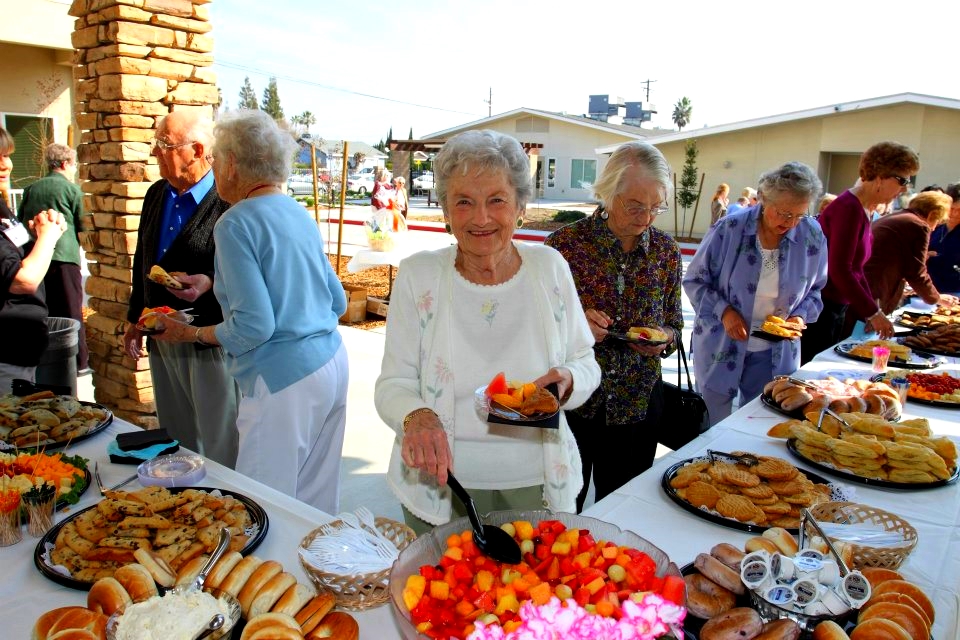
    As we age, home maintenance becomes increasingly difficult. Gutters, lawns, and leaky hot water heaters are no respecters of age! This is one of the biggest benefits to life in a retirement coCCRC_Buffetmmunity – the chores of keeping up a house are gone. You do not have to worry about who will water the lawn while you travel, or deal with the financial burdens of home ownership. 
  • Less Cooking.

    Many retirement communities (like Sierra View Homes Retirement Community in Reedley, CA) offer meal plans, where a certain number of meals are provided each day. These meals are tasty, and provide the opportunity to socialize with neighbors.

    We never miss the evening meal,” said one resident. “Not only is it nice not to worry about cooking, it’s also an important time for us to connect with our friends. My husband and I are always busy and out and about, but we plan around meal time with our neighbors and try to make it a priority.”

  • Interesting Activities.

    Retirement communities make social activity a priority, making it easier to keep active as you age. There’s something for everyone! Bingo, movies, exercise classes, swimming, cooking, musical events, shuffle board, pool-playing competitions, bus trips and featured programs  – the busy activities calendar increases the level of social activity and provides entertaining ways to socialize. Living in a retirement community makes it easier to find peers who have similar interests and enjoy similar activities.
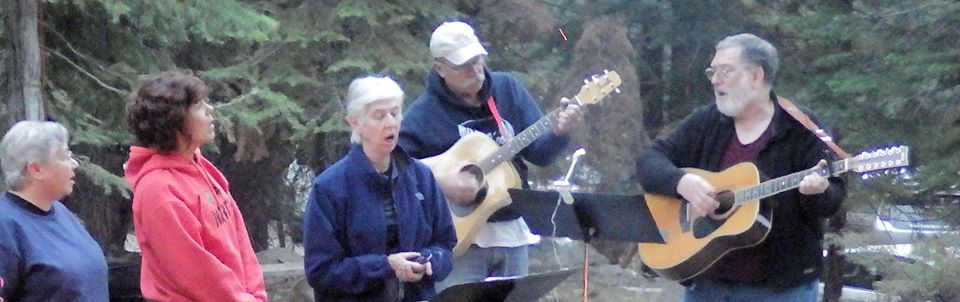
    Sierra View Guitar

  • Transportation.

    Most retirement communities offer transportation to surrounding shops and resources, which can be a vital service once driving is no longer an option. Sierra View’s shuttle goes to supermarkets every week, and other locations in the nearby city for special events. Even those who can drive often choose to tag along with their friends on the facility shuttle – why not turn the weekly shopping trip into a chance to chat?

  • Freedom.

    After devoting years to work and family, many seniors have a desire to experience traveling, deepening relationships or simply enjoy doing the things that interest them. There is a sense of freedom when you leave on a trip and know the staff and friends of the retirement community are watching your place. For many people, becoming a resident of a retirement community is a wonderful thing because many of the worries and burdens of life are gone, and in their place come new friendships, traveling companions, and rich experiences.

  • Access to Additional Services/Care Without Relocating.

    Recovering from a fall and need rehabilitation? Need some extra in-home services? Recovering from an illness that needs temporary skilled nursing care? These are situations that would require a complete relocation while still living in a house alone. In a retirement community, stepping up to a higher level of care does not necessitate losing your home, or even leaving it. Retirement communities offer the ability to smoothly move from one level of service to another, and back again, and typically preferred access to higher levels of care is given to those already living in the community.

  • Lower Financial Burden.

    There are often choices for housing in retirement communities, meaning that residents can choose their housing based on their budget. Knowing what your rent will be, and what your extra payments are, can help with budgeting for the future. A move to a retirement community can often lock in rates, or lock them to planned-for increases, which works better for a senior’s fixed income.

  • Respectful Neighbors.

    piano2
    Retirement communities have an age requirement of 55 and older, and as a result they enjoy a level of peace and quiet that cannot be found out in the general community. No loud rap music and frat parties here! 

  • Volunteer Opportunities.

    Retirement communities offer a wealth of opportunities for residents to make a difference, through service projects like gardening to make the community more beautiful, reading to those whose eyesight no longer allows them to, leading support groups, and going out together to make a difference in the Reedley community.

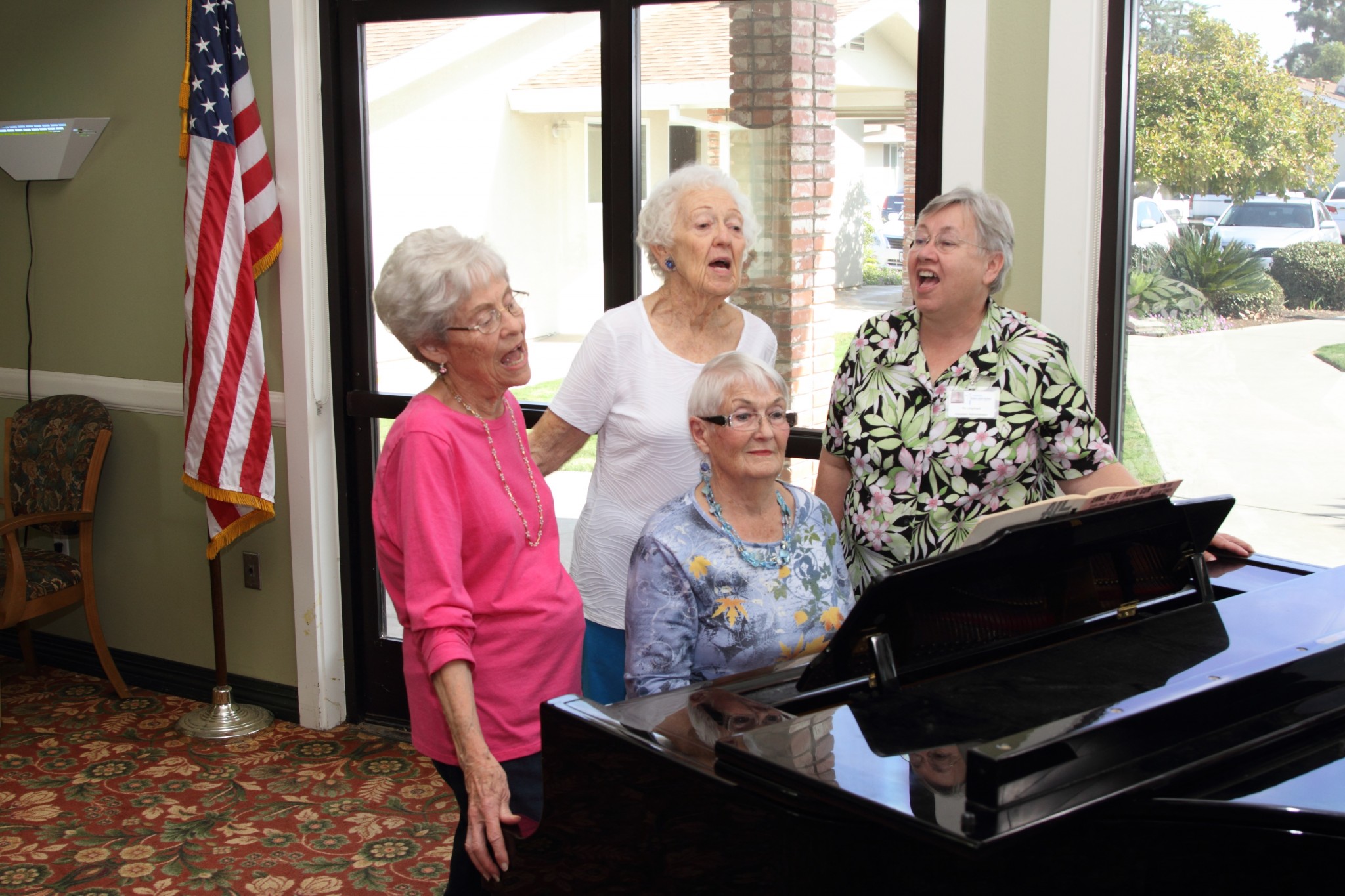
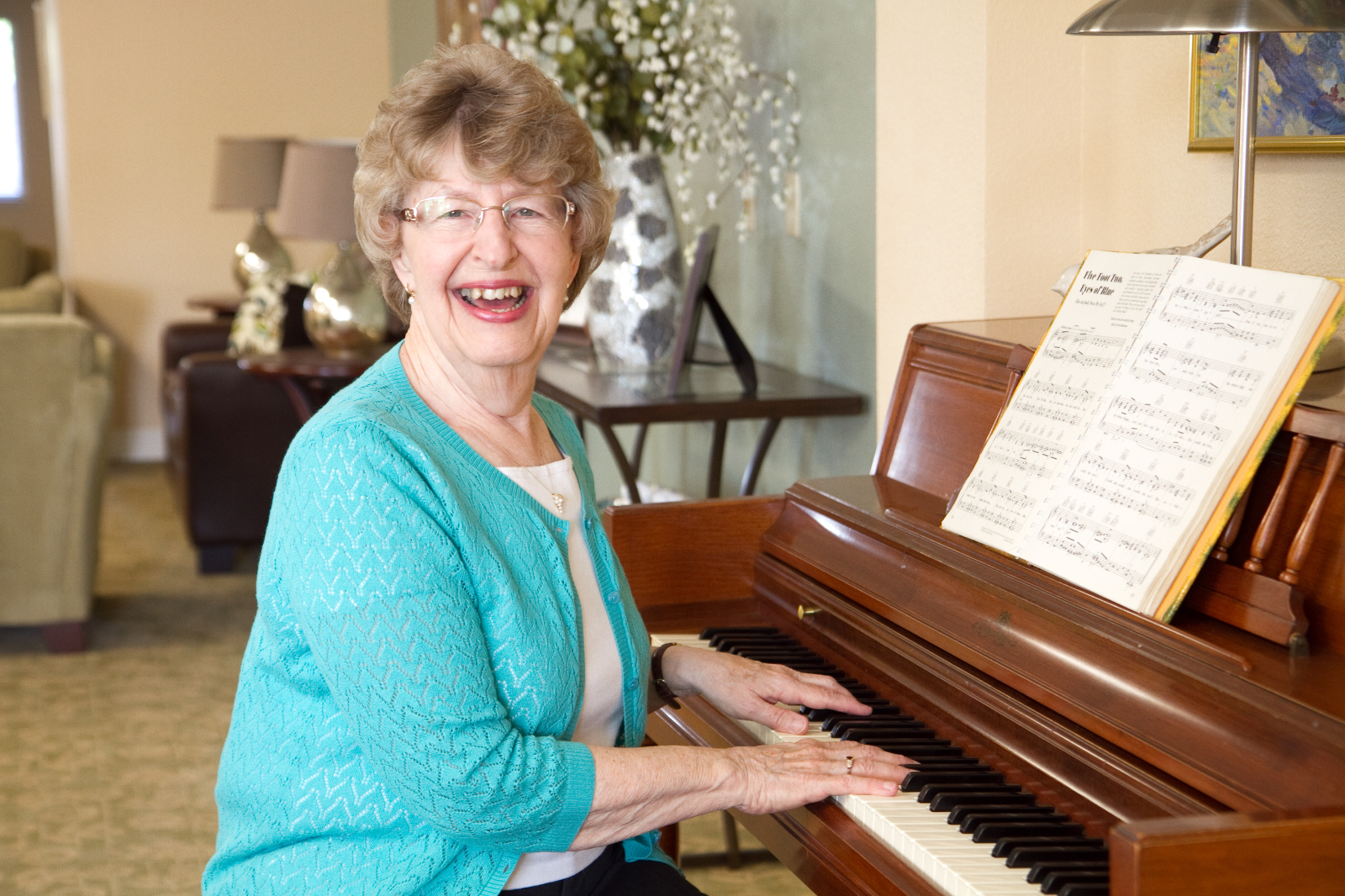
    I thought, what do I have to give? I realized that I can share my music. I have been playing the piano in the lobby for awhile now and I can’t begin to tell you how blessed I feel. There are so many opportunities here for those of us who enjoy volunteering. Sierra View Homes Retirement Community in Reedley, CA is the best place to live as a retiree.”

Make the transition to a retirement community today! The sooner you do, the sooner you’ll be enjoying the benefits that only retirement community living can provide.

Retirement Communities and Eating Habits

Could moving to a retirement community improve my eating habits and help me eat a healthier diet?   
– D. Mc. of Reedley, California

Yes! Living in a retirement community does encourage better eating habits. Very often, socialization during meals results in an increase in appetite.

Having a healthy diet with proper nutrition has benefits, such as increased mental ability, better mood stability, a strong immune system, more energy and faster recuperation times.

As we age there are factors that cause our eating habits to change, such as the loss of a spouse, a limited budget, metabolism starts to slow down around age 40. Activity levels change due to medical or physical problems. Our sense of taste and smell diminish and various factors can cause appetite changes, such as medication, depression, or an acute or chronic medical condition.

In the aging process we need to continue to exercise.  Statistics show weight more than age determines how much energy we have.  Eating food with fiber keeps the digestive system working well. Taking calcium walking and getting 15 minutes of sunlight daily, helps keep bones strong. Drinking plenty of water promotes regularity, helps our joints, keeps us feeling energetic and much more.  Avoiding foods with high sugar content is important; sugar can suppress the immune system, weaken eye sight, and contribute to obesity, diabetes and other chronic health issues.

Retirement living facilities offer help with maintaining good eating habits. Some independent living facilities have meal plans that can be purchased by the people who live there. There are facilities that offer one meal a day; others offer 2 or more. Some have the meal plan built right into the rental price. There are also assisted living and skilled facilities that serve 3 meals a day.

It should be noted that retirement communities create menu cycles based on the direction of a registered dietitian. For example, SVH has John Varin, RD who verifies diets for proper nutrient content and gives direction to the kitchen supervisor in coordinating food preparation and modified diets. . Retirement communities offer nourishing meals and the socialization encourages better nutrition by continuing to wet the resident’s appetite.

If living in a retirement facility is not an option then try having a potluck frequently with friends. Go to the community center either in Dinuba or Reedley for a noon meal M-F.

Both programs are serving meals very reasonably priced and offer other activities with possibilities to meet new friends and have things to do.

The life span for the average American is increasing. A healthy diet and regular exercise can help us live those extra years with energy, and enjoyment.

This article was co-written with John Varin, R.D. He is the consultant dietician for Sierra Kings Hospital and a number of long term care facilities in the Reedley area.