
fbpx
Pardon our dust! We are in the middle of a website redesign.

Dementia is Hard Work for Both Sides

Recently, while attending an educational conference, I attended a class taught by Laura Wayman. She has written a book on “A Loving Approach to Dementia Care.”

Dementia is not a specific disease; it is a term used for a group of brain disorders. Many diseases can have a dementia component. Alzheimer’s disease is probably the most prevalent. Recent studies show there are many more diseases that can result in dementia.

What is dementia? How can I tell if my loved one is on this path or could the problem be rectified? According to the Alzheimer’s Association, here are some symptoms that should not be ignored. Symptoms from the list include short-term memory loss when a person’s immediate memory is being challenged. Another issue can be the loss of the ability to process everyday activities which creates difficulty performing familiar tasks such as cooking, making a telephone call or remembering how to play a game. Struggling with words can be a sign of a problem. Individuals with Alzheimer’s disease often forget simple words or substitute an unusual word leaving the listener confused as to what is being said. Significant mood and/or behavior or personality changes could be a reason to be tested. We all have times when these symptoms are present. It could be brought on by medication, exhaustion, or stress. If you or your loved one is experiencing any of these symptoms for an extended period of time, seek help from a doctor who specializes in diagnosing dementia. For most of us, the symptoms will disappear when we take care of ourselves.

Laura Wayman talked about the caregiver of someone with dementia. She spoke about her mother’s journey as her father’s caregiver and shared insights she learned from watching them.

One of the issues for caregivers is the dementia-related person’s lack of ability to process thoughts and/or activities which often leads to trouble when a caregiver is trying to communicate. If a question is asked, an answer is expected. What happens when you cannot process the question? Anger and frustration can flare up. As our loved ones move deeper into dementia, it is important to remember not to ask questions. Wow, is that hard. I came back from my conference and noticed how often I would interact by asking questions of the people in Sierra View Homes Marden’s Place. We naturally want to ask questions. I did find I was successful in just talking with the resident because I got pleasant happier feedback.

The inability to process what is going on also means there is no good way for someone with dementia to tell us what is going on with him or her. Often, their behavior is the only way to understand there is an issue. People with dementia can be mirrors of the emotions of their caregivers. Have you heard the phrase “it is not what you say; it is how you say it”? In life, we all have encountered times when we felt put down or that someone was angry with us. Did the words stay with you or the tone of voice that caused you to take notice? If you are impatient and/or try to rush the dementia-related person, they will slow down. Showing you are frustrated and upset often leads to resistance and aggressive behavior. Laura stressed the importance of staying calm so everyone can have a better experience.

If you are a caregiver, it is extremely important to take care of yourself. You need to educate yourself on what to expect as the dementia progresses and to make sure you ask for help so you can step away for a few hours every so often. It is important that you keep yourself healthy and have the ability to cope with the situation. All too often, the caregiver becomes “worn out” and passes away too early.

Many of our residents’ family members find that interactions with their loved ones become more positive after they have moved into Marden’s Place Memory Care, our dementia-care assisted living. Not worrying about day-to-day caregiving tasks frees family members up for the positive, loving, meaningful interactions that they crave.

There is no cure for people with dementia. Studies show there are many more ways to get dementia than we previously thought. As the Baby-Boomer population ages we will see more people with a disease that has a dementia factor. Laura Wayman shared with those of us in her class the importance of continuing to be educated about dementia. The care of the dementia-related person is difficult, but the approach you use can significantly help you.


Service Animal or Emotional Support Animal – What’s the Difference?

Service and emotional support animals are becoming more and more common. The last time I flew to Kansas, in the Dallas Fort worth airport I counted at least three dogs that the owners kept near and one service dog helping its handler to maneuver through the crowds safely. It seems more and more people are realizing the benefits of having an animal in their life. A bakery in Morro Bay has a whole display case full of doggie treats so people who are vacationing can purchase something yummy for their dog as they sip their coffee and have a sweet roll.

When we opened the Terraces at Sierra View Homes Retirement Community, we decided to become pet friendly. That was a game changer for many people looking for a pet-friendly retirement community. As of today, we have had numerous dogs (must be small dogs) cats, birds and a bunny living in the apartments.

So, what is the difference between a service animal and an emotional support animal? A service dog is trained to do specific tasks for the disabled person assigned to them. The disability could be physical, sensory, psychotic, intellectual or other mental disability. Only a dog can be a service animal no other animal can be considered a service animal according to the ADA.

A service dog can be trained to assist an individual who is blind or has low vision and navigating streets are difficult. They can alert someone who is deaf to the presence of people or sounds. Pulling a wheelchair, assisting an individual during a seizure, and retrieving items such as medicine are a few of the things a well-trained dog can do. Each service dog is trained specifically for the person who will receive the dog.

Service animals are usually allowed in most public areas as long as the dog is under control. A service animal must have a harness, leash or other tether, unless the handler can control the animal by voice commands or hand signals.

If the animal barks, growls or jumps on individuals, the dog and the owner will have to leave the area. Service dogs help disabled people live a more satisfying lifestyle and helps their handler to live an independent life.

Service dogs are important and have a real purpose but what does an emotional support animal do? Unlike the service dogs there is no formal training to be an emotional support animal. Emotional support animals can be cats, dogs, ducks, and the list goes on. These animals’ primary role is to provide companionship and comfort to their partners who may be suffering from psychological disorders. The psychological disorders could be PTSD, chronic depression, loneliness, or anxiety. Emotional support animals give unconditional love proven beneficial to many people.

The advantage of owning a pet or emotional support animal is the need to care for it gives incentive to get up in the morning. Stroking, holding, cuddling, or otherwise touching a loving animal can have a powerful effect in lowering blood pressure. Touch and movement are two healthy ways to deal with stress. Pets encourage playfulness, laughter, and exercise. Laughing at the antics of a playful pet helps you enjoy life with a sense of well-being. Studies show playing with a pet can elevate levels of serotonin and dopamine which calms and relaxes us.

I expect to see more and more service dogs and emotional support animals in my travels and here at Sierra View Homes Retirement Community. I meet and greet residents, who brought their pets when they moved into the Community as they are walking their pets and enjoying the day. Animals do bring a sense of fun as Sassy, the cat, chases after her toy, or Sierra, the bird, tweets out a song, and the therapy dog make rounds just to say “hi.” Be it a service dog or an emotional support animal, more and more people are realizing the benefits of owning and loving a pet.

Chaplain’s Corner: The True Source of Prosperity

“For the Lord watches over the way of the righteous, but the way of the wicked leads to destruction.”

These closing words of the very first Psalm lay out the conventional wisdom that we find throughout the books of Psalms and Proverbs. Yet so often in life we are dismayed and frustrated at how often the wicked prosper and the righteous seem to come away empty handed. It offends our sense of what is right and what is fair.

We turn the Bible upside down for the secret key of what we have to do to make sure we have guaranteed security from pain, suffering and injustice. This dilemma was on the minds of the writers of scripture as well.

Of particular interest to me recently has been the book of Ecclesiastes. I recently heard a pastor summarize that Ecclesiastes asks the question: “What if the problem is not God failing to grant prosperity to the righteous, but with our expectation of what prosperity looks like?”

Clinton McCann suggests that “the happiness or prosperity of the righteous is not so much a reward as it is their experience of being connected to the true source of life–God.” May we remember to look for the prosperity that comes not through wealth and comfort, but through the source of life–God, which was present with us all along.
– Caley Ortman, Chaplain

Defining Self-Care

The month of Valentine’s has arrived! Of course, soon after Christmas, the popular Cupids and red hearts were up to remind us to be in good cheer and spend some money on goodies for our loved ones.

Let’s have a little different perspective this time. I would like to remind you to take care of yourself first. Taking care of yourself fuels the good you can do in the world. True self-care is more than a collection of sayings, self-indulgence or surface-level practices. It’s taking stock of your humanness and building yourself up.

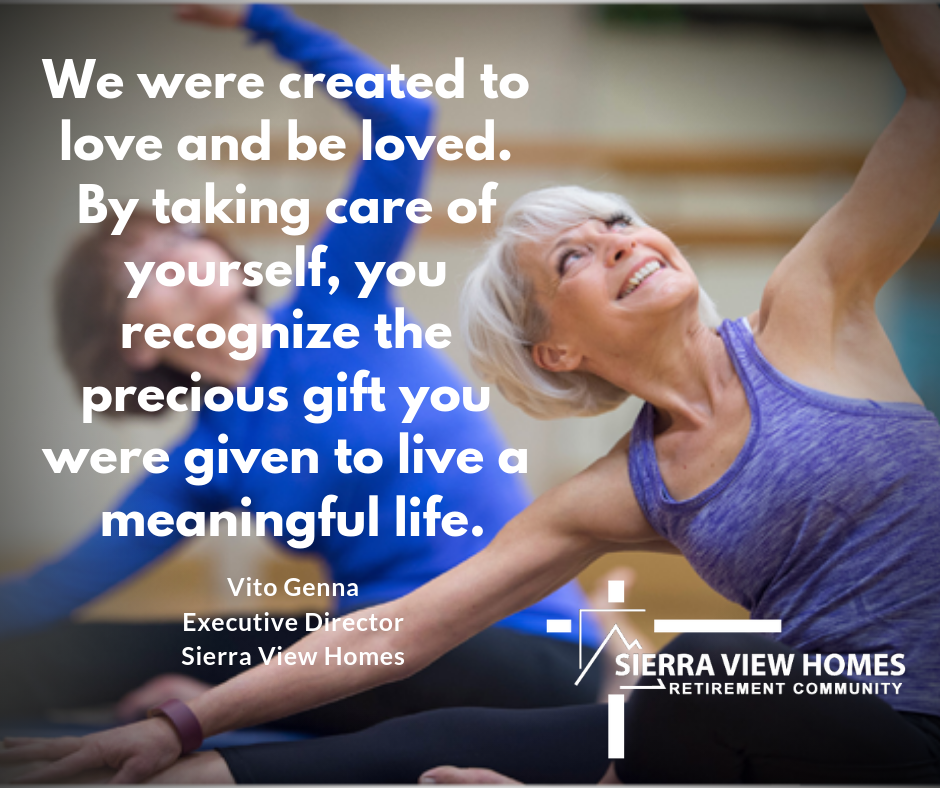
Each one of us has dignity as God’s Children. From the womb to death, each one is worth love and care. We were created to love and be loved. By taking care of yourself, you recognize the precious gift you were given to live a meaningful life. Too many, especially some care givers, give so much of themselves in being thoughtful, hard-working, persistent care deliverers, and in-addition active family members. All that caring takes a toll and we can easily see some get to a fatigue that diminishes health.

To those individuals, I say take time out for yourself. The old saying, if you don’t take care of yourself first, you are not going to be much help to others. It’s enlightening to consider self-care as an important sustainable habit that replenishes the body, mind and spirit.

Perhaps in this month, you can rework some habits that bring consideration to yourself. Is there a danger of too much pampering of oneself? For most of us, I don’t think so. The more we receive, the more we give away. May this Valentine’s Day find you replenished and able to love without limit and joyful to know that you are loved.

– Vito Genna, Executive Director

Want more articles like this? Sign up for Sierra View Homes’ monthly email newsletter! It includes events and happenings for the month along with thoughts from Vito Genna and SVH Chaplain Caley Ortmond. Submit your email address to Kecia at KFriesen@sierraview.org.

Lessons from Half a Century at Sierra View Homes

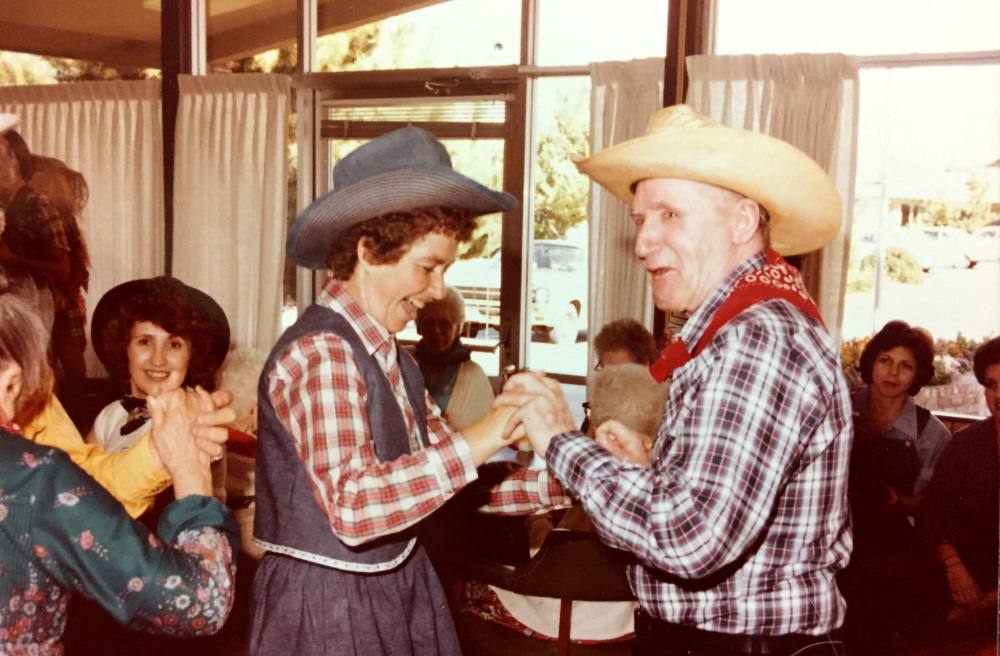
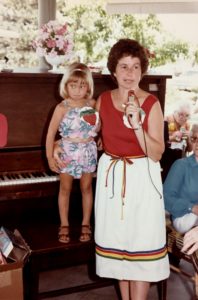
Nancy Petinak, circa 1981, dancing with a resident. “This was a really proud moment for me,” she said. “This resident suffered from PTSD and never talked or smiled. Over time, music brought him out of his shell, and he even danced. This picture captures a miracle.”

A lot changes in 44 years, but some things never change. No one can attest to this better than Nancy Petinak. The 79-year-old Reedley resident recently retired from her role as Activities Director at Sierra View Homes Retirement Community, a career which spanned an impressive 44 years.

Happy retirement, Nancy Petinak! You are loved. Thank you for your service!

Nancy played a pivotal role in the growth of Sierra View Homes from a small skilled nursing facility to a full-service continuing care retirement community. Nancy’s career is a source of great pride for Sierra View, as she exemplifies the unusual longevity of the organization’s staff, and more importantly, the service-oriented heart found beating beneath the everyday workings of the community.

When Nancy first began at Sierra View in 1975, she little expected that it would be the first and only employer of her career. “I was just hired because I could play the piano!” Nancy laughed. The director at the time, Art Bergthold Sr., wanted someone who could incorporate music into activities for the residents, and Nancy set out to do just that. She added music into workout classes, sing-alongs, performances, and weekly church services.

Before long, she had discovered that this was more than a job, it was a life’s work. “I realized it was a mission, and that God had placed me here for a reason, to help people and make their lives better each day,” she explained.

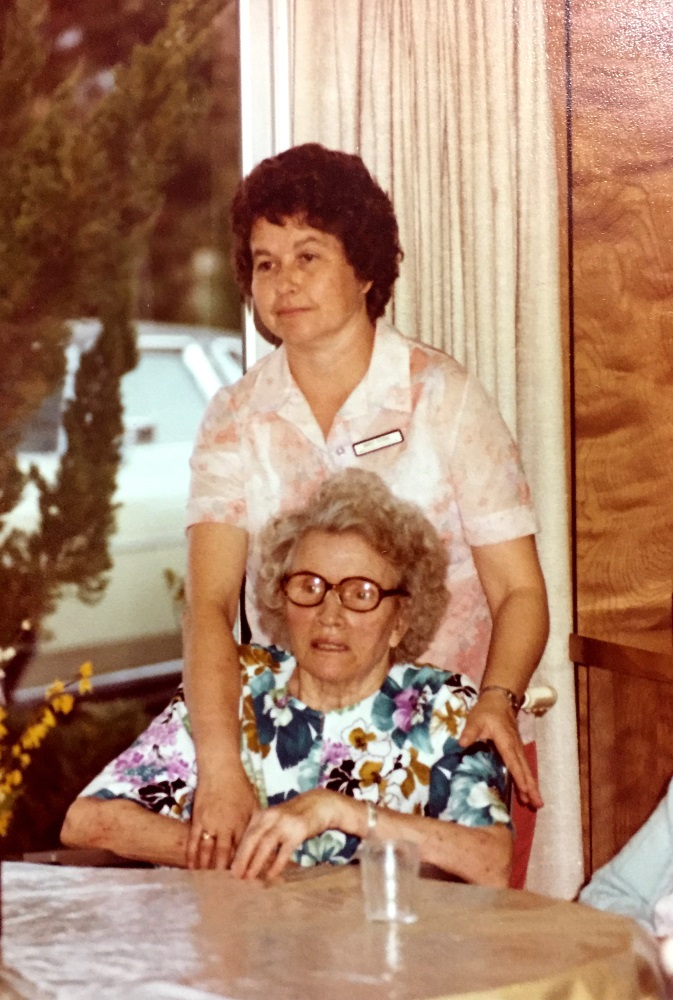
Nancy, circa 1982.

Over time, the methods she used to fulfill that mission evolved. “For many years, I focused on bringing events to Sierra View’s residents, like a Country Fair fundraiser that drew thousands of people from the neighborhoods in Reedley,” she explained. “I told our residents, if we can’t bring you to events, we’ll bring the events to you!

This philosophy, and her activity programs, were groundbreaking by necessity. “The year I started, activity programs had just begun to be required by the state, and innovations like assisted living and memory care for dementia patients didn’t exist yet,” she said. “Skilled nursing served a very wide variety of ability levels, from people who just needed a bit of assistance to Alzheimer’s residents who entered with extreme cognitive challenges.”

Nancy, circa 1982.

Thus, almost by accident, Nancy became a pioneer of dementia care. She established Sierra View’s Special Needs program, which laid the groundwork for Sierra View’s current Memory Care, transforming a dining room into a “neighborhood” with centers focused around everyday activities like cooking, laundry, sewing, and a home office. “We saw an immediate difference in our resident behavior,” she explained.

She recalls one particular resident, a former newspaper editor, who came into Sierra View angry and lashing out at the staff. However, at Nancy’s suggestion they added a typewriter and desk to the office area for him, and his behavior changed overnight. “He was suddenly very industrious, and typed all day long – it was like he was back to work,” Nancy said. “When we read what he was typing, it wasn’t always relevant, but it was clear that he was typing his feelings out. His family noticed an immediate improvement. They were so grateful that he was finally content and at peace.” Her program was so successful, in fact, that she visited other communities and spoke at conferences to teach about best practices in dementia care.

When Sierra View Homes’ dedicated Marden’s Place Memory Care wing was built, Nancy’s role pivoted once again, beginning to focus even more on the social needs of residents and their families. “I spent a lot of time mentoring families, dealing with individual concerns, walking residents and their families through power of attorney issues and disputes – basically helping families to understand what was happening to their loved ones,” she said. “But one of my favorite things was to sit with people and sing with them.”

In fact, over 44 years, Nancy has found that music is one of the constants. She helped bring the iPod Music program to Sierra View’s residents, where residents are provided with an iPod tailored to their individual favorite music. This has had special success in Sierra View’s Memory Care, where residents show marked improvement in happiness while singing along to their favorite tunes. “Music and scripture and prayer are the things that are never damaged by Alzheimer’s or dementia,” Nancy explained. “I’ve always told families that, and they seem to find comfort in it. Music, God’s Word, and prayer all speak straight to our heart, and that never changes.”

Another thing that doesn’t change is the service-oriented heart in Sierra View’s staff. “I’ve been blessed to work with a group of people who share my mission,” said Nancy. “Sierra View seems to draw people who want to make residents’ lives better every day, and I’ve been honored to work with many people who have really made a difference.”

Likewise, she has met incredible people in Sierra View’s residents. “One of our residents invented the little clip on pens so that you can hook it to your paper. Another invented a revolutionary design for airplane wings. We’ve had doctors, lawyers, missionaries, and Olympic medalists,” she said. “Sierra View is full of a wealth of stories and wisdom and history, just there for the asking.” So her advice to the younger generations after her? “Ask.”

Some things change – buildings rise up and organizations grow, and foundational staff like Nancy move on to new adventures. But the music, the heart of Sierra View Homes, and Nancy Petinak’s legacy, will always remain.

10 TIPS for Living a Dignified Life as You Age

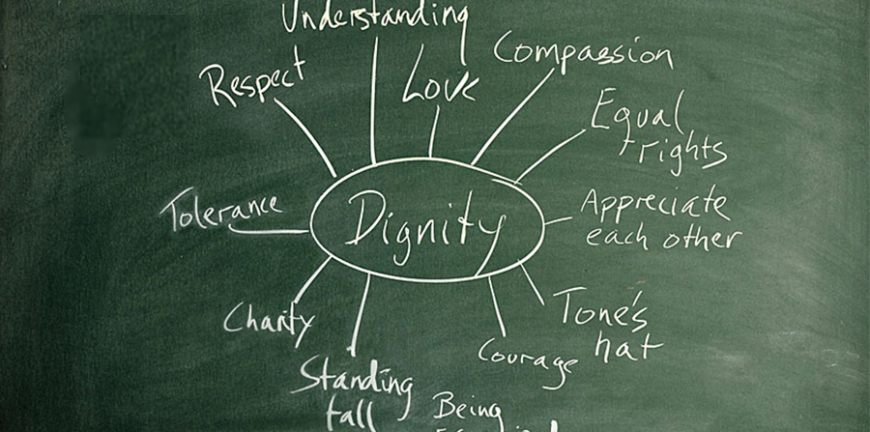
“Aging with dignity is the ability to live life to its fullest in the place you call home, regardless of age, illness or disability. “ So starts an article by Victoria R Ballesteros and Athan G. Bezaetis. Both are communication professionals with the SCAN Foundation. The article they wrote covers 10 points on the topic of aging with dignity. These are good points to use to look to the future. Here is a summary of those points with some comments of my own.

TIP #1: You Are Not Alone

We have been hearing for a while now that the huge number of baby boomers are now reaching retirement age. There are not enough retirement communities, assisted living buildings or skilled nursing facilities to accommodate the numbers of people who will need care. It is important for you to talk to your family. Share with them what aging with dignity means to you on a personal level and listen to what it means for them.

TIP #2: Different People Need Different Kinds of Support

Most folks need someone to socialize with, some need help with medication management and others need some help to make sure they eat nutritious foods. Older individuals with health conditions that make routine activities difficult need specialized help. There is help for giving care in the home. Contact your Area Agency on Aging, Medi-Cal office, and your doctor to find out what help is offered in your area. There are no free services; however, there are people who are willing to volunteer occasionally. A good place to look for volunteers is your church.

TIP #3: Family Member Support Counts.

Family is a vital part of aging with dignity. Family members do many kinds of hands on care for individuals who have health needs. Someone in the family often helps with finances either managing money or helping to pay for needed help. Emotional support is an important family contribution. This can be challenging when you also have to grieve the loss of health and vitality.

TIP #4: Plan for Expensive Long-Term Care

Hiring people to provide care in your home can get very expensive. I understand a certified nursing assistant is being paid more than $15 per hour in most cases. In-home support organizations are charging $25 per hour and above. Nursing Homes are trying to keep costs to the resident as low as possible, but ever increasing environment regulations forces the cost of providing care to continue increasing. Many nursing homes cost $7000 a month and above.

TIP #5: Medicare Does Not Pay

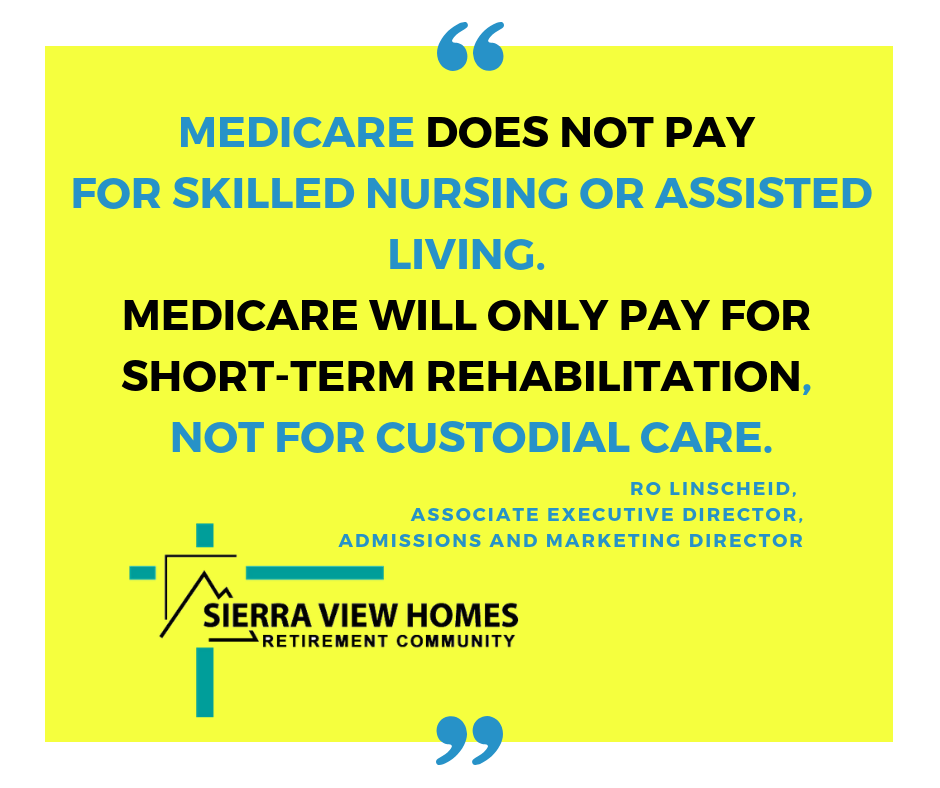
I get a number of calls each week with the question, “Does Medicare pay for my loved one’s stay in Skilled Nursing or Assisted Living>” They are so surprised when I have to tell them Medicare does not pay. Medicare will only pay for a short-term rehabilitation stay not for custodial care. If you stay longer in a Skilled Nursing Home, you will have to pay out-of-pocket. If you end up spending all of your assets, you may then apply for Medi-cal, California‘s version of Medicaid. Medi-Cal has several programs to assist you in paying health care costs.

TIP #6: Talk to Your Loved Ones.

Planning is important. Decisions are extremely difficult when a crisis happens. Has a Durable Power for Health Care been established? If it has, how old is it, and are the agents listed in the document still able to fulfill the functions assigned to them? Are health care wishes spelled out in the document, or have there been explicit conversations with the Durable Power agent so the wishes can and will be honored when that time comes?

TIP #7: Talk to Your Loved One’s Doctors

Aging brings health care changes. Being a strong advocate for someone who is aging means you need to know about what the doctors feel is the right treatment. Do you have the right specialists? Are there contradictory issues or treatments going on? Doctors do not necessarily talk to each other.

TIP #8: Build a Circle of Support

The Durable Power of Health agent is certainly an important person in the life of someone who is aging. It may also be important to have discussions with your loved one’s attorney, financial planner, insurance provider and other family members. It is never an easy task to bring everyone together, but it is important to bring all people involved into the decision-making process to honor your loved one’s wishes and desires.

TIP #9: We All Have Different Definitions of Aging with Dignity

We all want to age with dignity, choice and independence. We want to live life to the fullest regardless of age, health care issues or ability. Be sure you understand how your loved one defines aging with dignity and make that part of the master plan.

TIP #10: Get Involved

Decisions are being made at the state and federal level that could impact the services available to you and your loved ones. Stay informed and speak up by talking to your local, state, and federal officials. The SCAN Foundation website can keep you updated.

Aging with dignity is important and creates less fear in the aging process. At Sierra View Homes Retirement Community, we strive to do person-centered care to increase dignity in the lives of the people we care for. We care-plan the resident wishes in the Residential Care/Assisted Living Facility, keeping the resident center in the plan of care. There are activities for the independent living to help foster friendships and a sense of belonging and to stay physically agile. The goal is to provide an outstanding environment that promotes dignity and a sense of well-being.

For more information about Sierra View Homes Retirement Community, please contact Crystal Rogalsky at (559) 638-9226 and crogalsky@sierraview.org.

10 Tips for a Great Garage Sale in Reedley

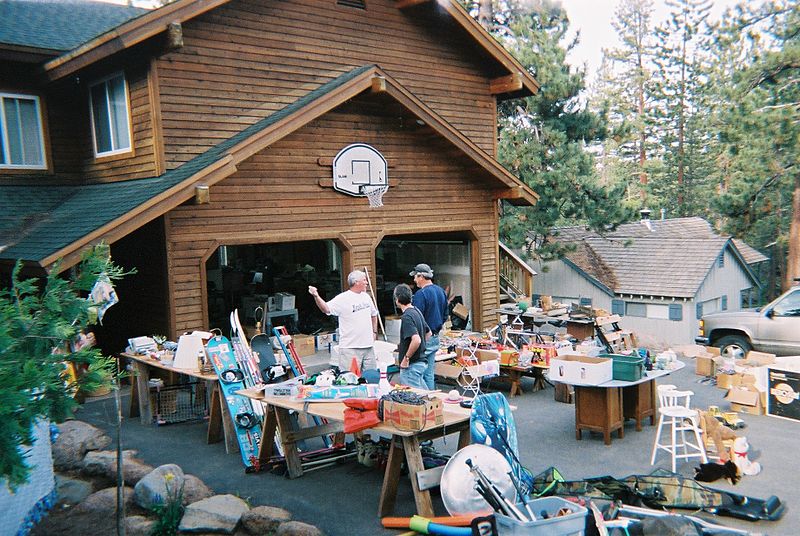
10 Reedley Yard Sale Tips! Are you ready to move into a Reedley retirement community like Sierra View Homes, but you’re still drowning in STUFF? Let’s downsize! It’s time to hold a garage sale!

Here are a few handy tips and tricks to make sure your Reedley garage sale draws a crowd:

  1. Don’t Forget Your Yard Sale Permit!
    Check out the City of Reedley’s rules for garage sales. The City of Reedley requires homeowners to purchase a $10 permit to hold a sale, and prohibits more than 2 yard sales each calendar year.
  2. Post Your Sale Online.
    Multiple websites are available to help you promote your yard sale, and most allow you to post your sale for free. 

  3. Post a Yard Sale Classified Ad in The Reedley Exponent.
    Yard sale ads cost $16, and the deadline is 10 a.m. on Monday for inclusion in Thursday’s newspaper. You can compose and submit your ad using The Reedley Exponent’s classified ad submission form. Then you will receive a call from them to provide payment over the phone.
  4. Put Up Signs. More signs = more awareness. Plan to post 5-10 brightly-colored signs.

  5. Try a Theme Sale.
    If you have a lot of one type of item, use that as your theme to draw traffic! Some ideas: Electronics Sale, Book Sale, Downsizing Sale, Furniture Sale, Clothing Sale, Garden Tools.
  6. Team up with Neighbors.
    A multiple-house sale will draw more interest.
  7. Don’t Overprice.
    A good rule of thumb is 10% to 25% of an item’s original value. Keep in mind that people shop at garage sales to get deals. If you want to sell the item for what it is worth, it will be worth more to collectors, or it’s a big-ticket-item, you may have better luck selling the item on Craigslist or Ebay.

  8. Keep Change on Hand.
    A good rule of thumb is to get $100 in cash:

    • 3 – $10
    • 6 – $5
    • 30 – $1
    • A roll of quarters.

      Make sure you keep your cash in a money belt or cash box!
  9. Make a Pleasant Shopping Environment.
    • Use Tables. Customers like to see things up close. Borrow tables if you need to in order to give you sale a more professional feel.
    • Hang Clothes. Hang clothing on a rack or a ladder, or on a closet pole held by two chairs.
    • Think Ahead. Have electrical cords for people to test out electronics, batteries for battery-powered items, and a mirror for people to try on accessories.
    • Music. Put on some nice music to add to the party atmosphere and make shopping more pleasant.
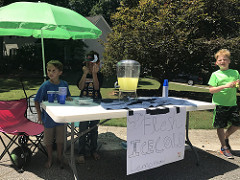
    • Beverages. If it’s a hot day, sell water, or get some neighborhood kid-entrepreneurs to put up a lemonade stand in your yard.
  10. Don’t Bring the STUFF Back In!
    Once an item leaves your home, don’t bring it back into the house.

    • Designate a “free” box for items that you just want people to take off your hands!
    • Donate the leftovers, or post them online for free:

Seniors and Social Media

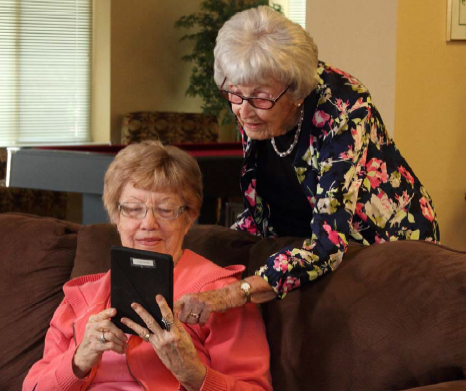
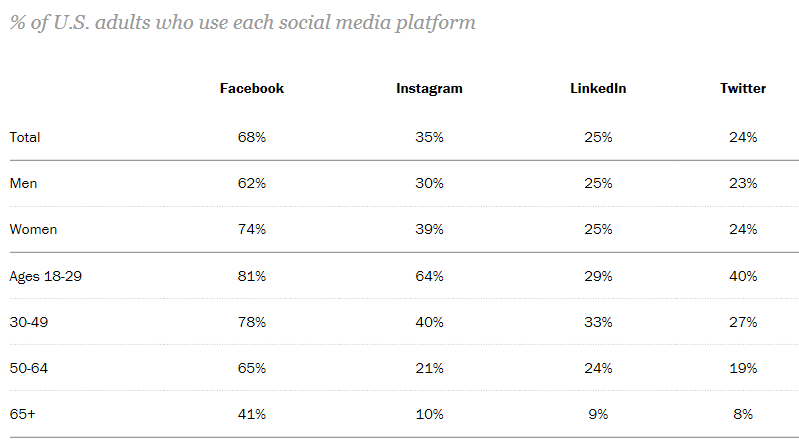
When you think of social media, your first thought may be of teenagers on their phones. However, increasingly, you should think of a senior! Recent data provided by the Pew Research Center  revealed that seniors are more wired and socially connected than ever.

Electronic use among seniors is on the rise, with the number of seniors 65+ reporting owning a smart phone increasing from 18% to 42% over the last 5 years. Roughly one third of seniors now reports owning a tablet.

Social media use is also increasing steadily, with 35% of all seniors reporting use of social media platforms.  Of the seniors using social media platforms, the vast majority use Facebook, with Instagram, LinkedIn and Twitter trailing far behind (see table).

However, while seniors are using these technologies more and more, we still have a ways to go in education and comfort-level,  as “just 26% of internet users ages 65 and over say they feel very confident when using computers, smartphones or other electronic devices to do the things they need to do online.”

As our society continues to move online for resources, societal discourse, news, and social connection, it’s important for older Americans to continue to acquire technological skills. The steady increases displayed by this Pew Research data shows that seniors recognize technology’s importance. The world is online – and so are seniors!

Avoiding Falls As We Age

Challenges seem to creep up on us, as we age. One change is losing your balance and suddenly finding yourself on the ground. Recently, I had an unexpected fall when I was at a camp in the mountains as I came down a short flight of steps, I think I must have missed a step because I suddenly found myself splat on the ground! I looked around and was pleased to see no one had witnessed this event. Next, I took stock of my extremities and found that nothing was hurt so I gathered myself and got up. I realized that I was stunned and shaky as I stood there reassessing what just happened. I am fortunate to have the strength and ability to rise up by myself. As we age the strength changes in our muscles and bones and falls can be devastating.

Statistics show that one-third of the population over 65 will fall each year. The statistics increase dramatically once a person reaches the age of 85 and above. Why do people fall? There is a long list of reasons. Some major factors are environmental trip hazards such as uneven surfaces or wet surfaces, throw rugs or poor footwear. A rapid change in blood pressure, ear problems causing balance issues, and heart problems are a few physiological reasons a person could suddenly fall. Certain medications can cause you to be light headed or dizzy. Taking medications improperly can lead to trouble. Work with your doctor to change medications to something that do not give you these side effects.

Fortunately, for me, I had the strength to get up on my own. Many people over the age of 65 cannot rise up from the floor on their own. Leg strength is an important part of healthy aging. Exercising regularly builds leg strength and helps the body maintain balance. If you suspect you have muscle weakness and are afraid you might fall, schedule an appointment to see your doctor. He/she can prescribe some physical therapy for you to help you build up your muscles and maintain balance. If you do fall and are unable to get up you could be on the floor indefinitely, especially if nobody regularly checks up on you. At Sierra View Homes, we have pull cords in each Independent Living apartment and Assisted Living bedrooms and the bathrooms to call for assistance when you are in trouble. Some folks have chosen to have an “alert pendant or bracelet” on them so all they need to do is push a button and help is on its way. Some of these folks have made Sierra View Homes the first person to call on their system.

Many times doctors will prescribe a walking aid if they feel you are at risk of falling. There are many types of aides such as various styles of canes, front-wheel walkers, three-wheel walkers and four-wheel walkers. All have their advantages, but they are not without risk. The aid can become a trip hazard. If you are using a walking aid, please pay attention to where your feet are in relation to the walking aid. It is easy to do the exact thing you were trying not to.

I was happy to say the only thing that was hurt in my fall was my pride. I was able to stand up and get on with the events of the day. Many people are not so lucky. If you are over 65 and have had a fall, do not ignore it. It could be a symptom of a treatable condition. Work with your doctor on what may be the cause. He/she may prescribe a strength and balance program to increase your odds of catching yourself if you trip. You should check your medications for possible side effects of dizziness and finally, yet importantly, be sure to wear sturdy shoes that offer good support. We are living longer and it is important to keep the risk of falling to a minimum to have the best quality of life possible.

A Frank Look at the Hot Dog

hotdog
As summer looms ever closer, we think of the American outdoor cuisine, the hot dog. Whether at a baseball game or just outside grilling, the hot dog with toppings seems delightful. I thought that maybe it is time for a closer look at the old favorite.

All of us have enjoyed a good hot dog. There are all sorts of hot dogs on the market these days. In the food committee at Sierra View Homes, we often hear we need to put hot dogs on the menu. Indeed, in a quick survey, it became apparent that hot dogs are a staple for many seniors living alone. It is so easy to pop one or two from the freezer into the microwave for an easy meal.

Hot Dog History

I wanted to know the history of the hot dog. What I found out is what we call a hot dog has been in existence for a very long time and there are several stories about its origin. One story said the frankfurter was developed in 1487. That was five years before Columbus set sail for the new world. Frankfurt, Germany, claims to have created the first Frankfurter. The people of Vienna, Austria, want to claim the birthplace of the wiener. The hot dog sold during the 1800s in the United States was probably a mixture of widespread common European sausage recipes.


Hot Dog Ingredients

The next step was to understand what ingredients went into a hotdog. A typical hot dog usually has highly processed low-quality meats with lots and lots of preservatives. Common ingredients include meat trimmings, usually pork or beef trimmings, but chicken and turkey are also popular, fat, and flavorings such as salt, garlic, and paprika. Sodium erythorbate and sodium nitrites are also added preservatives that cure the meat. Nitrates enhance color and increase shelf life. Hot dogs are amazingly high in fat and sodium content. One dog can have 14 grams of total fat, 5 grams of saturated fat and 400-500 milligrams of sodium. All this totals up to nearly 20 percent of the daily recommendation.


Are Hot Dogs Nutritious?

The all-important question is whether hot dogs are good for you. The answer is a resounding, No! They are not nutritious. Huge amounts of sodium and nitrates should make us pause before we consume that dog. We all have heard about nitrites in hotdogs. During the cooking process, nitrites combine with amines, naturally present in meat, to form cancer causing compounds. These compounds have been associated with cancer of the oral cavity, bladder, esophagus, stomach and brain. Nitrites occur naturally in many vegetables, like spinach, celery, green lettuce, and root vegetables; but the vegetables appear to be effective in reducing the risk of cancer. When eating food like hot dogs it is important to eat antioxidant rich food such as tomatoes or vitamin C packed orange juice to counter the risk.

There are healthier hot dogs on the market these days. Hot dog producers are now making dogs processed without nitrites. Nitrite free hot dogs taste the same as the nitrite dogs but the color is browner instead of red. Supermarkets are now stocking Nitrate/nitrite free or uncured hot dogs. These dogs rely on natural sources of nitrate such as celery juice, extract or powder. There are also hot dogs made with organic turkey or chicken. It is important to read the package carefully because there still could be high sodium, saturated fat content.


Hot Dog Choking Risk

In our campus food committee meeting, we also needed to discuss the possibility of people choking on hot dogs. In the 65 and older population, chewing and swallowing may be lessened due to illness or other health issues so the possibility of choking is a real issue.

Choking is the third leading cause of death for all ages. Common culprits are nuts, popcorn, grapes, carrots and, yes, hot dogs. Hot dogs are dense and have small diameters that fit easily into the windpipe creating a plug that blocks airflow. Good advice is to chew carefully and not swallow in big gulps and have something to drink on hand so you can swallow and move things along.

Alas, we had all better think twice before we reach for that not so healthy, not so safe frank. Frankly, you would be better to skip it. In my report to the food committee, it became apparent hot dogs do not belong on the menu. We will enjoy other healthier summer food!