
Living Longer Is Only Part of the Story: Why Engagement Matters
Dennis Gradillas, MA, MBA
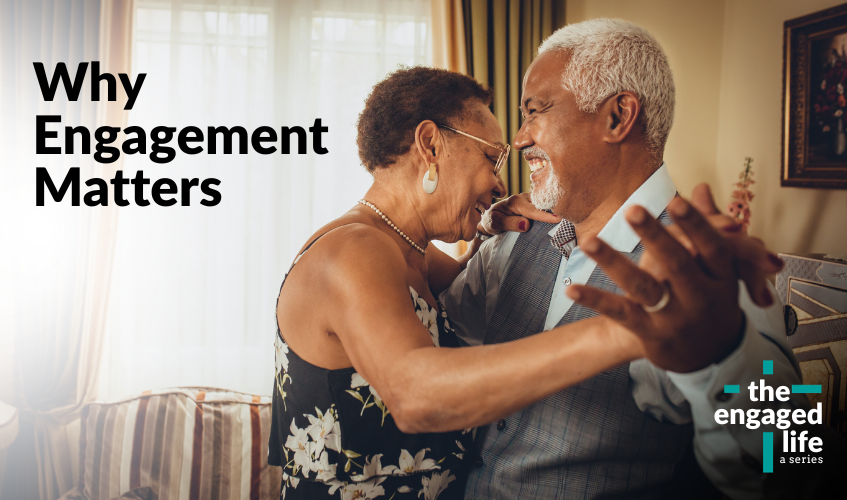
When people hear the words “stay active,” they often picture a brisk walk, a fitness class, or someone lifting weights.
Those can all be wonderful choices. But an active life is about much more than exercise. It is about staying connected to the people, interests, and purposes that make life feel like your own.
That is where the conversation about longevity becomes more meaningful.
Living longer may be the goal that gets the headlines. Health span—living more of our years with the best health and function available to us—is the part we experience every day. It shows up in ordinary moments: sharing a laugh over lunch, tending a garden, singing a familiar song, learning something new, helping a neighbor, or moving our bodies in a way that feels good.
In other words, living well is not a spectator sport. We need ways to keep participating in life.
Engagement has more than one shape
Being engaged does not look the same for everyone, and it should not.
For one person, it may mean joining a walking group or trying a new exercise class. For another, it may mean attending a concert while using a wheelchair. It could be playing cards, visiting with family, helping with a community project, attending worship, working on a puzzle, or sitting outside with a friend.
For a person living with memory loss, engagement might be singing a song from years ago, folding towels alongside someone, looking through family photographs, or enjoying the reassuring rhythm of a familiar activity.
These are not lesser versions of an active life. They are real expressions of connection, ability, pleasure, and purpose.
The question is not, “Can I do what I used to do?” A more useful question is, “What can I take part in today?”
Why engagement matters
Researchers are still learning how our habits, health, environment, and relationships interact as we age. No single activity guarantees a longer or healthier life. Genetics, medical conditions, access to care, and plain old chance all matter. Aging well is not a contest, and illness is never evidence that someone has failed.
Still, the choices available to us can make a difference.
The National Institute on Aging notes that meaningful activities can benefit the mind, body, and spirit. Staying socially connected can also support mental and physical well-being, while regular movement may improve balance, sleep, mood, and everyday function.
There is a practical lesson here: we do not need one perfect activity. We need a mix of opportunities that help us move, connect, think, contribute, and enjoy.
Five ways to become more engaged this week
- Move in a way that works for you
Movement can be walking, stretching, gardening, dancing, or taking part in an activity adapted to your abilities. A little movement is still movement. If you have been inactive, have a health condition, or are unsure what is safe, ask your healthcare or rehabilitation professional for guidance. - Put one connection on the calendar
Do not always wait until you “feel social.” Invite someone to coffee, sit with a new person at lunch, call an old friend, or attend one community event. Small, regular connections often matter more than grand plans. - Give your brain something interesting to do
Try a new recipe, listen to a talk, learn the rules of a game, read about an unfamiliar subject, or ask someone to teach you a skill. Curiosity does not have an age limit. - Find one way to be useful
Purpose does not require a title or a large project. Welcome a new neighbor. Write a note. Share your experience. Help prepare for an activity. Ask someone how they are doing—and take time to hear the answer. - Choose something simply because you enjoy it
Not every activity needs to improve us. Music, humor, sunshine, good food, art, and conversation have value because they make a day more enjoyable. Pleasure belongs in a healthy life, too.
Start where you are
It is easy to believe that change must be dramatic to count. Usually, it does not.
One conversation can lead to a friendship. One class can awaken an old interest. One short walk can become part of a routine. One invitation can help another person feel that they belong.
So here is a simple challenge for the week ahead: choose one activity that helps you move, connect, think, contribute, or enjoy—and ask someone to join you.
Aging well is not about trying to stay young. It is about continuing to participate in life, with the abilities, opportunities, and support available to us today.
That is an engaged life. And it can begin with one small choice.